

The Vic casino Plinko
Introduction
Plinko looks almost disarmingly simple at first glance. You drop a ball from the top of a pegged board, watch it bounce left and right, and wait to see which multiplier it lands on at the bottom. That is the whole premise. Yet in practice, The vic casino Plinko attracts attention for a reason: it strips casino play down to pure timing, probability, and tension.
From my perspective, this is exactly why the format stands out. There are no reels to decode, no long paytables to memorise, and no The Vic Casino bonus terms wagering and promo details round to chase through layers of symbols. Instead, the appeal comes from a visible chain of random outcomes. Every deflection feels small, but together they decide whether the drop ends in a modest return, a dead zone, or a rare high multiplier.
For UK players browsing The vic casino, Plinko can seem easier to understand than a classic online slot. In one sense, it is. In another, it is easy to underestimate. The interface is clean, the rules are short, and the round resolves quickly, but the actual experience can vary sharply depending on the chosen risk level, board setup, and betting discipline. That gap between simple presentation and very different real-world sessions is what makes Plinko worth analysing properly.
This article stays focused on that practical question: what does Plinko really offer, how does it work, where are the risks, and who is likely to enjoy it at The vic casino?
What Plinko is and why players keep coming back to it
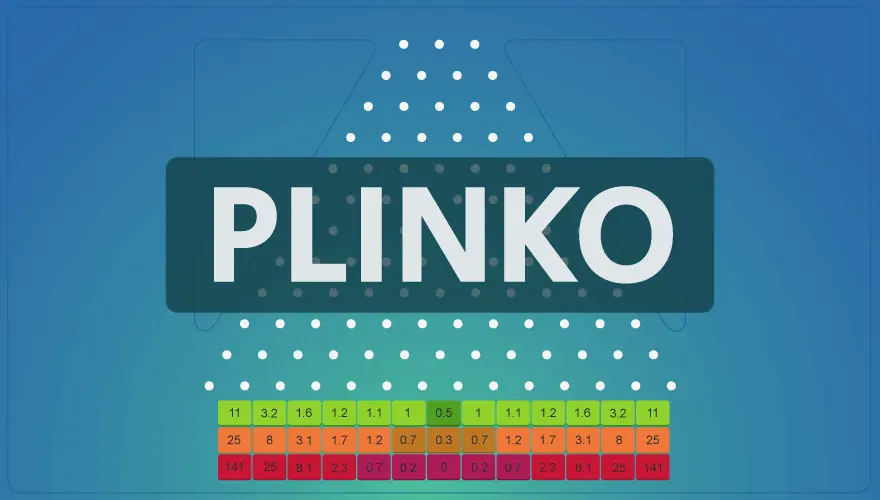
Plinko is a chance-based casino game built around a vertical board filled with pegs. A ball is released from the top and bounces through the field until it lands in one of several slots at the bottom. Each slot carries a multiplier. The final multiplier is applied to the stake, producing the result of that round.
Its visibility is part of its strength. In many games details, the random process is hidden behind spinning reels, card dealing animations, or abstract number generation. In Plinko, the path is shown to the player in real time. You can literally watch the outcome form step by step. That does not make the process predictable, but it makes it feel tangible.
There is also a strong psychological hook here. The centre slots usually appear more often, while the outer edge multipliers are rarer and much larger. As a result, most rounds look close to something more dramatic than they actually become. A ball can spend half its descent drifting toward a premium edge zone before one late bounce sends it back inward. That creates suspense in a way that is different from a slot spin, where the result often feels decided before the animation finishes.
Another reason Plinko has become so noticeable is pacing. A player can complete many rounds in a short session without dealing with complicated menus or side features. The game is easy to start, easy to repeat, and easy to scale up or down in intensity through stake size and risk settings. That combination makes it accessible, but also potentially deceptive for anyone who equates simple rules with low exposure.
How the Plinko board actually works in play
At the mechanical level, Plinko is built on repeated binary deviation. As the ball strikes each peg, it is redirected left or right. Over multiple contacts, these tiny directional changes create the final route. The player does not control the exact path after release. What can usually be adjusted is the stake, the number of rows, and the risk profile.
Those settings matter more than new players often assume. The number of rows affects the length of the descent and the spread of possible landing positions. More rows generally mean more bounces, a wider distribution, and often a more pronounced contrast between common middle outcomes and rare edge results. Fewer rows usually produce a shorter, less stretched result pattern.
The risk setting changes the payout map at the bottom. On lower risk, the multipliers are typically flatter. This means the board tends to offer more moderate outcomes and fewer extreme jumps. On higher risk, the centre can become less forgiving while the edges carry much larger multipliers. In practical terms, that shifts the session from steadier churn toward sharper swings.
| Core element | What it changes | What it means in a real session |
|---|---|---|
| Stake size | The monetary value of each drop | Higher stakes amplify both ordinary losses and rare high-return moments |
| Rows | The number of deflections before landing | More rows usually increase spread and make edge outcomes feel more distant but more dramatic |
| Risk level | The shape of the multiplier distribution | Low risk supports smoother sessions; high risk creates bigger volatility and longer dry stretches |
| Drop frequency | How quickly rounds are repeated | Fast repetition can accelerate bankroll swings before the player notices the pattern |
One of the most useful ways to understand Plinko is to stop thinking of each drop as an isolated event and start viewing it as part of a distribution. A single ball can land almost anywhere allowed by the board. But over time, the game tends to cluster around more probable zones. This is where many players misread the experience. Because the motion is visual and dramatic, it is tempting to treat near-edge paths as signs that a big multiplier is “close”. In reality, each drop remains independent.
That is one of the first practical lessons I would stress for anyone trying The vic casino Plinko for the first time: the animation is transparent, but it should not be mistaken for a pattern you can exploit.
Why the session rhythm feels so different from a slot
Plinko has a very specific tempo. It is not just fast; it is concentrated. A slot spin may include symbol evaluation, line counting, expanding features, respins, or a bonus tease. Plinko compresses the whole experience into a short arc of anticipation and resolution. The ball drops, ricochets, lands, and the next round is ready almost immediately.
That rhythm changes how a session feels. There is less narrative build-up than in a feature-heavy slot, but more direct repetition. For some players, this is a major advantage. They do not want to wait through long animations or chase a bonus trigger. They want a cleaner loop of stake, drop, result, repeat. Plinko delivers exactly that. A quick read of The Vic Casino cashback bonus guide before choosing a real money casino answers most questions about limits and account settings.
At the same time, the speed can make bankroll movement feel abstract. A player may remember the occasional high multiplier and overlook how many low-return or zero-return drops happened in between. This is not unique to Plinko, but the short cycle makes it more noticeable. The game can feel light and casual while producing meaningful balance swings in a very short window.
A memorable detail here is that Plinko often creates “micro-drama” rather than “event drama”. In a slot, the emotional peak is usually a feature round. In Plinko, the emotional peak is often a single late bounce one peg away from the edge. That makes the tension more frequent, but also more fragmented.
Risk levels, probabilities, and what players should not misunderstand
The most important thing to understand before launching Plinko is that visible movement does not reduce randomness. The ball’s path is shown on screen, but the underlying logic is still probability-driven. You are watching random variation unfold, not reading a system that can be forecast with confidence.
Risk settings deserve special attention because they shape the entire tone of the game. A low-risk board usually has more balanced multipliers. Returns may still vary, but the extremes are softened. A high-risk board does the opposite: it opens the door to standout multipliers, but it usually does so by making low-end outcomes much more common. That means a player can experience a long sequence of disappointing drops before seeing a result that changes the session.
On paper, that sounds obvious. In practice, many players only feel the difference after a few dozen rounds. High-risk Plinko can be harsher than it looks because the board’s simplicity masks how top-heavy the reward structure can become.
Low risk is generally better for players who want to understand the flow of the board without immediate sharp balance swings.
Medium risk often provides the most readable compromise between regular small returns and occasional stronger hits.
High risk suits players who knowingly accept long dry sequences in exchange for a chance at a much bigger multiplier.
Another point worth keeping clear is that probability is not the same as fairness in feeling. A mathematically sound distribution can still feel punishing if the session lands repeatedly in low-value zones. Plinko is one of those formats where the emotional reading of the board can diverge sharply from the statistical reality. A player may feel that the ball is “always” avoiding the good slots, when in fact the board is behaving exactly as designed.
That is why bankroll planning matters here more than the minimalist interface suggests. A game with short rounds and visible randomness can invite impulsive repetition. Without limits, that can turn a quick experiment into an expensive one.
What makes Plinko distinct from slots and other casino formats
Plinko sits in a different category of experience from a traditional online slot, even if both rely on random number generation in the background. A slot is built around symbol combinations, reel positions, and often layered feature design. Plinko is built around one event: the descent of the ball through a probability field.
That difference affects almost everything the player feels.
| Format | Main source of tension | Player experience |
|---|---|---|
| Plinko | Visible path toward a multiplier slot | Fast, direct, easy to read, but highly swing-dependent at certain settings |
| Classic slots | Symbol alignment and feature triggers | More layered, often slower, with stronger emphasis on bonus rounds |
| Roulette | Single-number or colour result | Clear odds structure, less animated progression during the round |
| Crash-style games | Timing of cash-out before the bust point | More decision-led, with pressure on reaction and discipline |
Compared with best roulette information for The Vic Casino players, Plinko feels less static because the result unfolds visually rather than appearing at once. Compared with crash games, it removes the decision of when to cash out; the player commits before the drop and simply watches the outcome resolve. Compared with slots, it is less about content depth and more about clean probability exposure.
That last point matters. Players who enjoy themed presentation, evolving features, and long bonus rounds may find Plinko too bare. But players who prefer a transparent loop and immediate result often appreciate the lack of clutter. In that sense, The vic casino Plinko is not trying to outdo slots on spectacle. It succeeds by offering a different form of concentration.
Where the real appeal comes from during a live session
In my view, Plinko works best when a player understands that the excitement comes from contrast. Most drops are ordinary. The board needs that ordinariness so that the uncommon outcomes feel meaningful. If every result were dramatic, the game would lose its tension almost instantly.
The second source of appeal is control at the setup stage rather than control during the round. You do not steer the ball, but you do choose the conditions under which it falls. That creates a subtle sense of authorship. Players can tune the board toward steadier or sharper sessions, and that makes the format feel more personal than its stripped-down design might suggest.
A third, often overlooked, point is that Plinko is unusually good at exposing a player’s own tolerance for variance. Two people can play the same board and come away with completely different reactions. One will see the long run and accept the distribution. Another will fixate on the near misses at the edges and feel frustrated. The game reveals temperament very quickly.
That is one of the more interesting observations I have had while reviewing this format: Plinko is not only testing a bankroll, it is testing patience. And it does so within minutes, not hours.
Strengths and limitations of The vic casino Plinko in practical terms
Plinko has genuine strengths, but they are specific strengths. It is not a universal fit, and that is worth stating plainly.
Its biggest advantage is clarity. The player understands the basic objective immediately. There is no learning curve comparable to a feature-heavy slot or a strategy-based table game. That makes it accessible to newcomers while still leaving room for meaningful choice through board settings.
The second advantage is pacing flexibility. A player can keep stakes low and use a gentler setup for a lighter session, or raise the intensity through higher risk and faster repetition. The format adapts well to different moods, which partly explains why it has become so visible across modern casino platforms, including Thevic casino references players may encounter in search results or page labels.
But the same qualities create limitations. Simplicity can become repetition. If a player needs variety, progression, or thematic immersion, Plinko may start to feel thin after a relatively short period. It does not have the layered structure that keeps some slots engaging over longer sessions.
There is also the issue of perception. Because the board is visual and the rules are short, some players approach it as a casual low-stakes distraction. That can be a mistake. Depending on the risk mode, Plinko can produce very aggressive swings. The clean interface does not make the underlying exposure gentler.
Strong point: immediate readability and almost no barrier to entry. The full picture of payment methods lives in The Vic Casino crash games details before claiming bonuses or depositing, including the less common ones.
Strong point: clear session customisation through rows, stake, and risk profile.
Strong point: quick rounds that suit players who dislike drawn-out feature cycles.
Weak point: limited depth for players who want narrative or strategic complexity.
Weak point: high-risk settings can drain a balance faster than the minimalist design suggests. If bonuses are what you care about, The Vic Casino Aviator crash game review breaks down every offer currently running.
Weak point: repeated near-miss moments may encourage emotional rather than disciplined play.
Who this format suits and who may be better off elsewhere
Plinko is a good fit for players who value speed, visual transparency, and a straightforward ruleset. If you prefer to see the whole outcome process rather than wait for a reel engine to calculate symbol combinations behind a themed interface, this format makes sense. It also suits players who like adjusting volatility-style exposure through a simple control rather than choosing between dozens of very different slot models.
It is less suitable for players who want deep engagement from a single session. If your ideal casino experience involves unlocking rounds, following a feature arc, or making layered decisions, Plinko may feel too one-dimensional. It can also frustrate players who react strongly to streaks, because the game often delivers its tension through repeated ordinary outcomes punctuated by occasional spikes.
For cautious players in the UK market, the best entry point is usually modest: test the board at low stakes, pay attention to how different risk levels alter the feel of the session, and resist reading intention into the ball’s path. If the rhythm feels engaging rather than draining, then Plinko may be a useful addition to your rotation. If it quickly feels repetitive or emotionally noisy, another format will probably suit you better.
What to check before launching a Plinko session
Before starting Plinko at The vic casino, I would focus on a few practical points rather than jumping straight into repeated drops.
Review the risk setting first. This is not a cosmetic option. It changes the whole shape of possible results.
Set a session budget before increasing speed. Fast rounds can compress losses into a short period.
Understand the board layout. More rows and wider multiplier gaps usually mean a more stretched outcome pattern.
Use demo mode if available. It helps you read the rhythm without treating early results as meaningful trends.
Do not chase edge multipliers emotionally. The rarest outcomes are designed to be rare, not “due”.
The biggest mistake I see with Plinko is not misunderstanding the rules. The rules are simple. The bigger mistake is misunderstanding the session profile. Players often think they are entering an easy, lightweight format when in fact they are entering a high-frequency probability loop where discipline matters a lot.
Final verdict on The vic casino Plinko
The vic casino Plinko offers a very specific kind of casino experience: fast, visible, stripped back, and heavily shaped by probability distribution rather than feature design. Its strength lies in clarity. You know what is happening, you see the path unfold, and you can tune the session through risk level, rows, and stake size. For players who want direct action without the noise of complex slot structure, that is a real advantage.
At the same time, Plinko deserves more caution than its simple interface implies. The game can shift from casual to punishing very quickly, especially on aggressive settings. Its visual transparency may make it feel readable, but it does not make it predictable. That is the central point any player should carry into a session.
If you enjoy quick rounds, visible randomness, and a format that reveals its character immediately, Plinko is worth trying at The vic casino. If you need richer progression, more variety, or a stronger sense of strategic involvement, you may find it too narrow. In short, Plinko is not compelling because it is trendy or easy to explain. It is compelling because it turns pure chance into something you can watch unfold in real time, and that creates a tension many other casino games struggle to match.
FAQ
How does Plinko work step by step before the ball drop?
Choose your stake, then select how many balls or rounds to play. The ball is released and falls through the pegs, landing in a numbered slot on the board. The multiplier linked to the landing slot is applied to the outcome for that ball.
If the Plinko demo mode is available, what changes compared to real money?
Demo mode lets players practice the mechanics with play money. Real-money play uses an account balance and follows the site limits and wagering rules where applicable. Gameplay feels the same, but outcomes in demo do not reflect cash value.